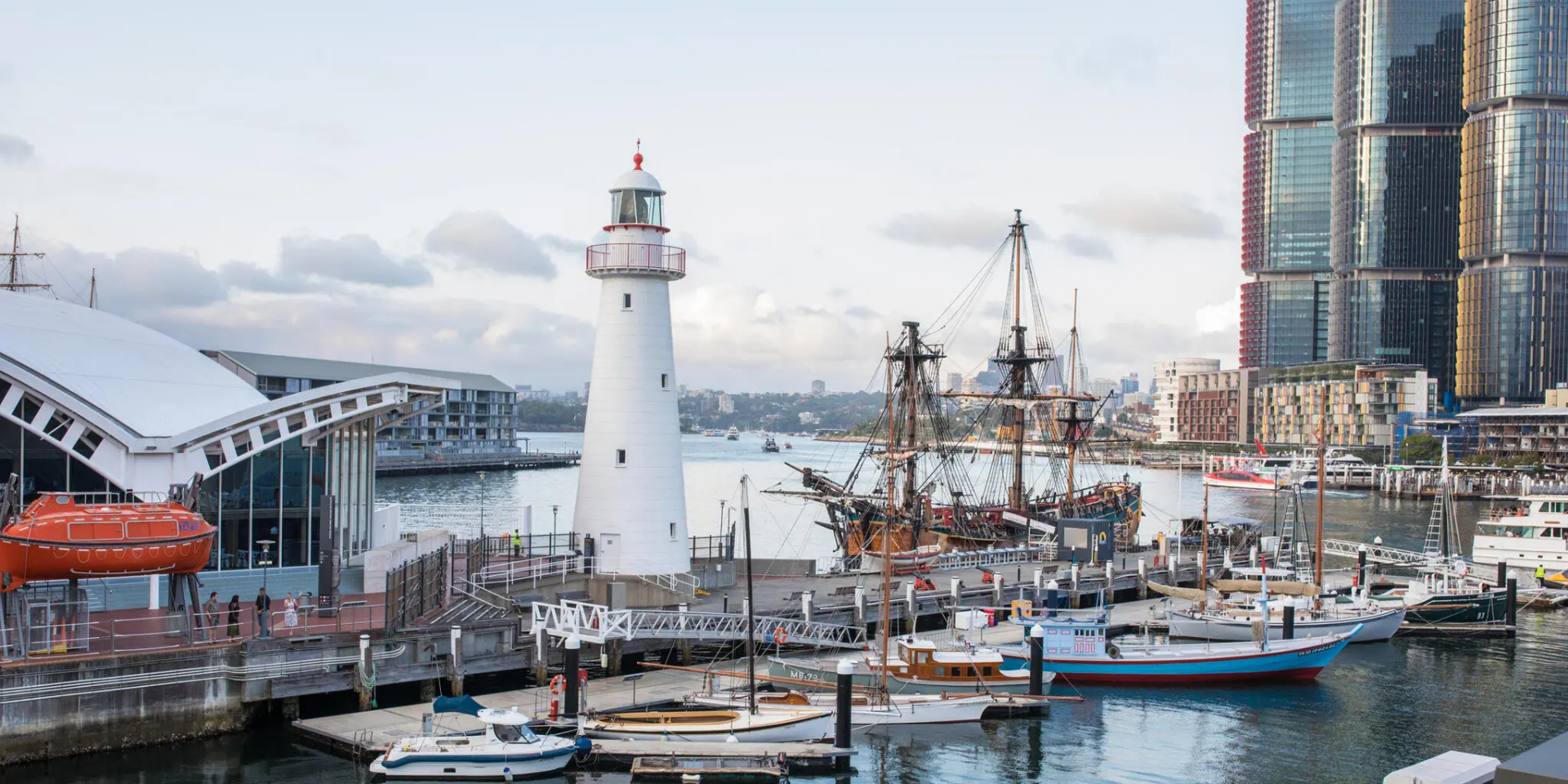
Fieldwork
During the fieldwork excursion, students will explore the National Maritime Museum and investigate how exhibitions, artifacts and displays can help us understand the past. Image retrieved from the National Maritime Museum website.
Risk Assessment
Please click the link to view the following risk assessment and appropriate strategies for the Stage 3 National Maritime Museum excursion.
NESA Outcomes
HS3-HIS-01: Examines and describes the development of Australian colonies and Australia as a nation, using sources as evidence.
HS3-CWT-01: Creates written texts to communicate ideas and understanding about people, places and events of the past and the present.


Inquiry Question
How can the exhibitions, objects and artifacts at the Australian National Maritime Museum help us understand how people lived in the past compared to today?
Activity 1: Object Investigation
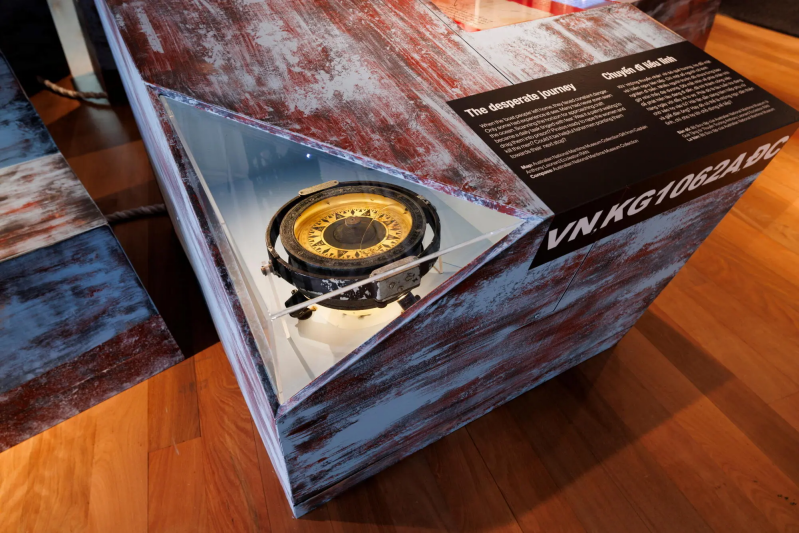
The Tu do Compass is part of the Australian National Maritime Museum's exhibition: Voyage to Freedom. Looking closely at the compass, it is from the Vietnamese refugee boat Tu do. The Vietnamese fishing boat carried 21 Vietnamese refugees from Vietnam to Darwin in 1977, guided by a map and compass (Australian National Maritime Museum, 2024)
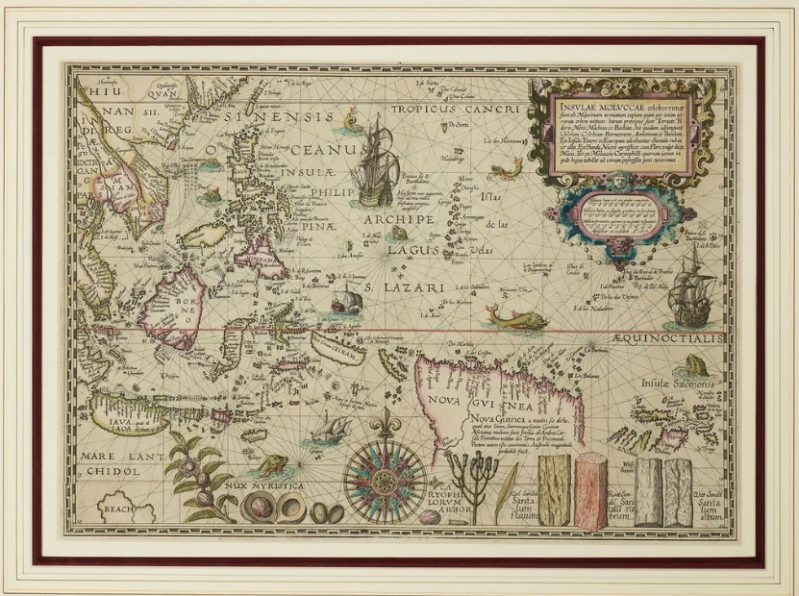
Maps show how people understood the past and how people travelled across Australia and its seas. The "New Holland" map was an early representation off Australia before it was fully mapped by Europeans. Aboriginal and Torres Strait Islander peoples had knowledge about the stars, planets, winds and waterways which supported their voyages across Country and sea (Australian National Maritime Museum, 2024).
Instructions
1) Students will be given clipboards and a pencil to complete a worksheet activity.
2) They will complete the following worksheet activity: https://canva.link/9f8psgdl025dg6k
Activity 2: Maritime Bingo
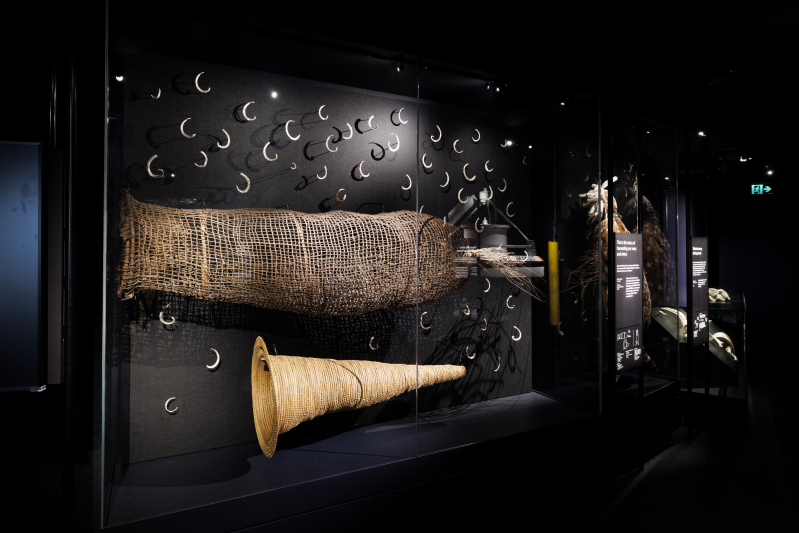
There are many exhibitions, artifacts and objects on display at the museum, allowing students to explore Australia's history, navigating the land and sea. This enables students to develop a deeper understanding of how people, places and events have shaped the history of Australia.
Instructions
1. Students will be given clipboards and a pencil to complete a bingo card based on what they have observed whilst on the excursion.
2. They will complete the following bingo card: https://canva.link/ua953w1bcukc0m2
Activity 3: Would you Rather
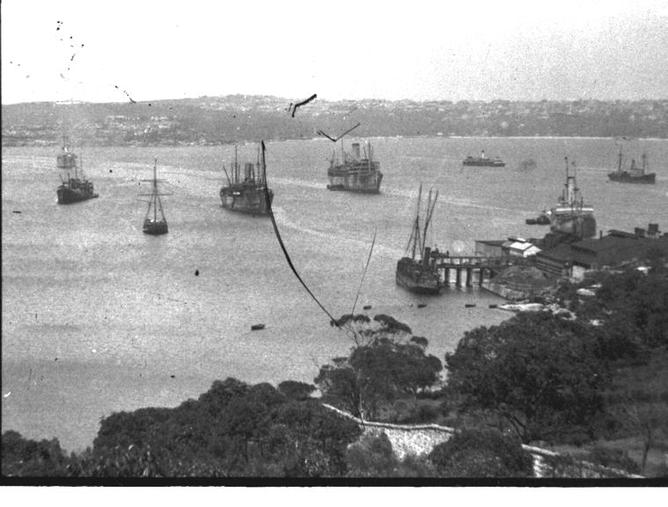
This image gives us an idea of how people lived, travelled, and used Sydney Harbour and the surrounding area before modern construction. It allows us to compare the past environment with Sydney Harbour today. Image retrieved from the City of Sydney Archives.
Life in the Past and Present at Sydney Harbour
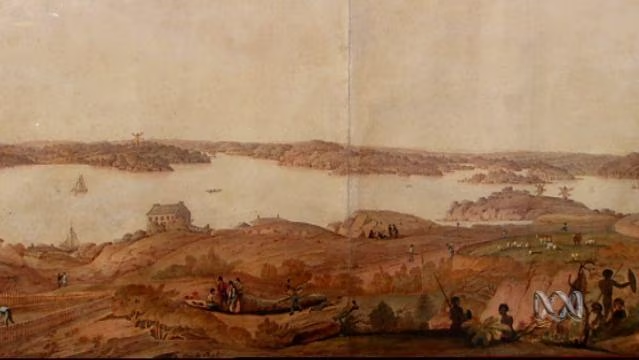
Before European colonisation, life around Sydney Harbour was closely connected to the natural land. Aboriginal peoples, including the Gadigal people, lived around the harbour and relied on it for food, shelter and travel. People fished, hunted, and travelled on the surrounding waters. (ABC News, 2022).
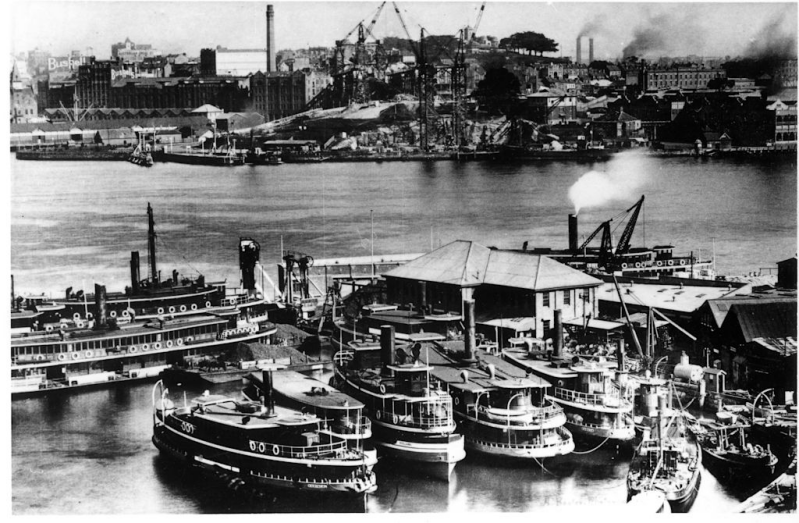
100 years ago, life around Sydney Harbour was very different compared to today. The harbour was used for transport and work surrounded by a few buildings, roads and technologies. People travelled by ferries and the harbour, like today was an important aspect of everyday life. (City of Sydney).
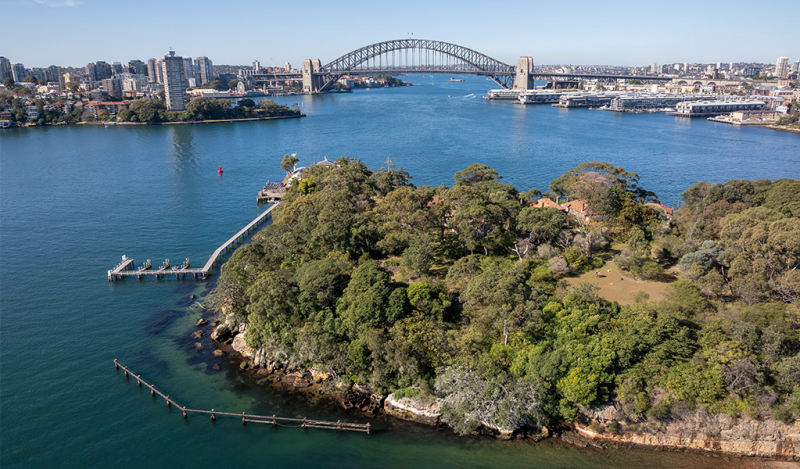
Today, the Sydney Harbour has developed into a busy and modern part of Sydney. It is mainly used for transport, work and recreation with many famous landmarks such as the Harbour Bridge and the Opera House surrounding the Sydney Harbour area.
Instructions
1) In a large room or outdoor area, all students will participate in a Would You Rather game. The space will be split into two sides, and the game will be guided by teachers.
2) The following questions will be asked based on information they have learned from their museum experience:
Would you rather travel in a historical sailing ship or a modern ship?
Would you rather navigate the sea using stars or a compass?
Would you rather use historic technology or modern technology?
Would you rather be an explorer or a historian?
Would you rather explore a new island or discover a historic shipwreck?
3) Students will have to move to either side they prefer based on their answer. They will then be asked if they want to share their reasoning for the choice they made by referring to evidence from the museum and comparing the past and present.
Create Your Own Website With Webador